Who Gets to Be a Hero? Rethinking the Stories We Tell at Charity Sportives

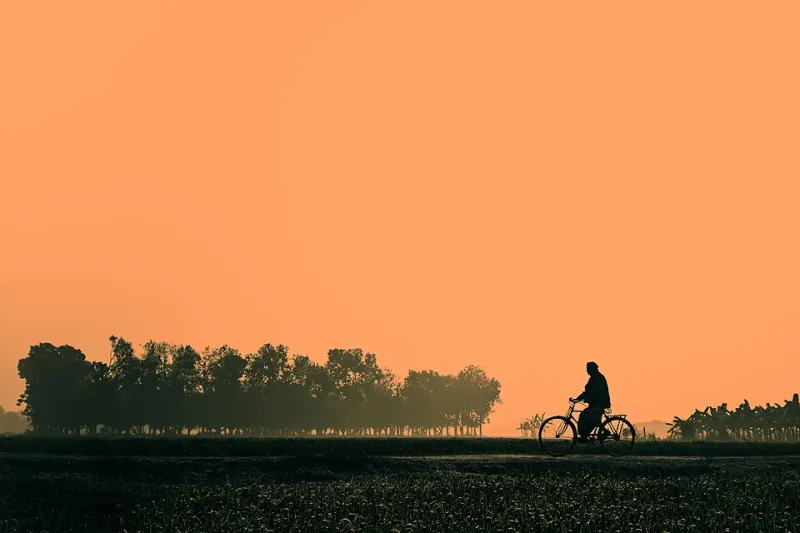
Photo: Holger Krisp, CC BY 3.0, via Wikimedia Commons
There is a photograph that appears after almost every charity sportive in the UK. A rider, arms in the air, face crumpled with effort and relief, medal in hand. It's a good picture. It raises money. It makes people tap donate.
It also flattens a day that contains far more than one moment — and far more people than the ones who cross the line with something left in the tank.
The photo everyone expects
Charity cycling marketing has a narrow vocabulary. The rider who 'battled' through. The transformation. The tearful embrace at the finish. There's nothing dishonest about any of it, and plenty of participants genuinely want that moment captured and shared.
The problem is when that single frame becomes the template — when the only story an event knows how to tell is one of visible, photogenic overcoming. Because the people most affected by cancer don't always arrive at the start line in a state that photographs well. Some are mid-treatment and riding 20 miles because it's the furthest they've felt able to go in a year. Some are carers who haven't had a Sunday to themselves since 2024. Some are riding in memory of someone and would rather not explain that to a photographer in a hi-vis vest.
Who is actually on the start line
Look around any sportive village hall and you'll see a peloton that doesn't match the brochure. You'll see handcycles and adapted trikes. You'll see e-bikes, which are entirely legal in the UK when pedal-assisted and capped at 15.5mph and 250 watts, and which make a 25-mile route possible for people who otherwise wouldn't enter. You'll see a rider whose hair hasn't grown back yet, wearing a cap and hoping nobody says anything. You'll see people who raised £80 and feel awkward about it next to someone on £4,000.
None of them are less part of the event. Most of them are the reason it exists.
Words do a lot of work
Cancer language is a minefield, and there is no single correct dialect. Some people are perfectly happy calling themselves a warrior. Plenty aren't — they were just ill, and treatment wasn't a battle so much as a schedule. Phrases like 'lost their fight' can land badly with the bereaved, and 'brave' can feel like an obligation rather than a compliment.
The workable rule is simple: let people choose their own words, and don't draft them for anybody. An entry form that asks, optionally, whether you're riding in memory or in support of someone is useful for the charity. A social media post that writes someone's diagnosis into a fundraising narrative without asking is not.
What inclusive design looks like in practice
If you run an event, most of this costs very little:
- Offer a range of distances and say plainly that all of them count. A 10-mile family loop and a 100-mile challenge can sit on the same page without one being the consolation prize.
- Have an adaptive and e-bike category, and put it in the main entry list, not a footnote nobody reads.
- Set generous cut-off times, and staff the back of the field properly. The last rider deserves the same marshals, the same feed stop and the same finish line as the first.
- Ask about photography consent at entry, and use coloured wristbands or numbers so it's obvious on the day. GDPR isn't a nuisance here — it's a courtesy.
- Provide a quiet space and a welfare point, with signposting to Macmillan, Maggie's, Cancer Research UK nurses or Samaritans. Know your safeguarding routes before the day, not after.
- Make carer places free or heavily discounted, and don't require anyone to justify their entry with a diagnosis.
- Brief marshals on language and on not asking personal questions. 'How's your training gone?' is a safe question. 'So what stage are you at?' is not.
Keeping the fundraising honest
Inclusivity collapses if the money messaging turns it into a competition. A few principles worth defending:
Be transparent about costs. If part of the entry fee covers medals, timing chips and loos, say so. Claims that 'every single penny goes to the cause' are usually inaccurate and always risky.
Don't guilt people into asking. Fundraising is a skill and a privilege, not a personality test. Someone who volunteers at a feed station, marshals a junction in the rain for five hours, or brings three friends to cheer has contributed. Say that out loud in your communications.
Don't inflate the story to inflate the total. Avoid implying that a ride is treatment, that cycling prevents cancer, or that a particular total equals a particular outcome. Hope is a fine thing to sell. False precision isn't.
And treat donated stories as donated. If a rider shares something personal for the event page, that's a gift, not an asset to be recycled across three campaigns and a sponsor deck.
Practical takeaways for riders
Ask before you share. If you're riding for a friend, check what they're comfortable with you saying — including whether their name appears at all.
Don't assume. The person next to you at the start might be in active treatment, might be two years clear, might have lost someone last month, might have no personal connection whatsoever and just likes bikes. All of those are fine.
Ride at the pace of the slowest person in your group, and mean it. Wait at the top of the hill. Check that the quiet one at the back is eating.
And if you're the one having a hard day, you're allowed to say so. Charity rides are unusually full of people who will understand.
For event teams, one last thing
Measure what you celebrate. If the only numbers in your post-event report are entries, average fundraising and finish-line photographs, you'll optimise for those. Add a line about how many adaptive riders took part, how many carers used a free place, how the welfare point was used, and what people said in the follow-up survey. What gets counted gets cared about.
The finish line is not the finish line
The image of one rider with their arms up is not a lie. It's just not the whole peloton. Somewhere behind them is a person who rode eleven miles and cried in the car park, a carer who got a Sunday back, a nurse who signed up on a whim, and a rider who quietly put a name on their number and told nobody.
They're all raising money for a cure. They're all the point. The least an event can do is make room for them — and then be careful about what it puts on a poster.