Nobody Gets Dropped: How to Ride Alongside a Friend Returning to Cycling After Cancer Treatment
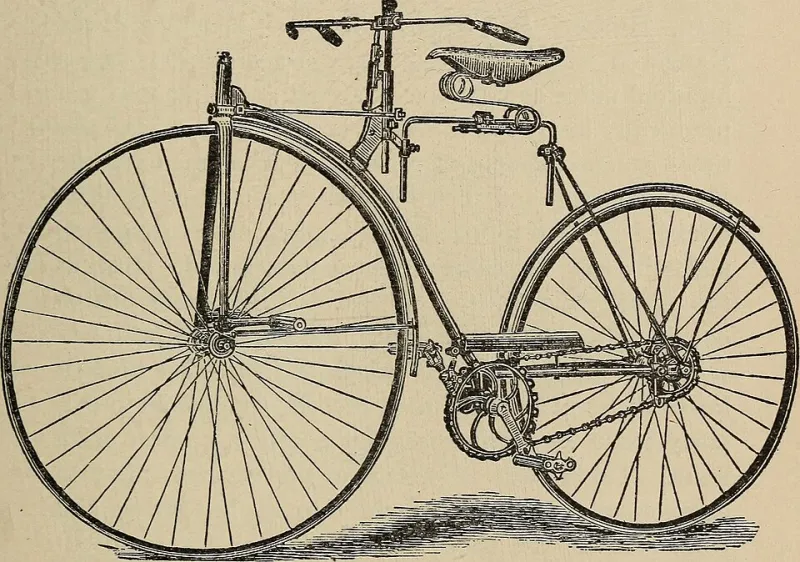
Photo: Internet Archive Book Images, No restrictions, via Wikimedia Commons
There's a message that tends to land in the club group chat at some point, usually late on a Sunday evening: I'm thinking about getting back on the bike. When it comes from someone who has been through cancer treatment, the instinct is to answer with logistics — a route, a date, a twelve-week plan.
Resist it. The most useful thing you can offer first isn't an itinerary. It's the sense that there's no deadline, no pace target, and absolutely no chance of being left behind on a climb in the rain.
None of what follows is medical advice. We're riders who've watched friends come back, not clinicians. Their oncology team, specialist nurse or physio has the final word on what's sensible — and it's worth saying that out loud, early, so nobody feels nudged past a limit to be polite.
Let them choose the date, the distance and the direction
A ride arranged for someone else's convenience is a commitment. A ride arranged for theirs is an invitation. Ask what day suits, how long they fancy, and whether they'd rather go out with one person or five. Some people want the low-level noise of a group; others want a single friendly wheel and no audience for the first wobble.
And don't book it for next Saturday. Fatigue can arrive without warning, and a plan made four weeks out is far easier to move than one made four days out.
Go short, stop often, and treat the café as the finish line
Twelve miles with a proper sit-down halfway beats thirty miles with a cereal bar in a lay-by. The café isn't a reward for the ride — on a return outing it's roughly half the point. Look for somewhere with outdoor seating, a decent loo and no queue. Garden centres, National Trust tea rooms and the better village stores are reliable. If the car park is a mud bath in February, that's not a welcoming start.
E-bikes: say 'brilliant' and mean it
If they arrive on an electric bike, the only acceptable response is enthusiasm. A legal UK e-bike — 250W motor, assistance tapering off at 15.5mph — isn't cheating. It's a tool that lets someone ride further than their current fitness allows and still arrive able to hold a conversation. Check the fit, check the battery range before you plan the loop, and be ready to shorten the route if the assist runs out earlier than expected.
Adapted bikes aren't a step down
Recumbents, trikes, handcycles and tandems open up cycling to people dealing with balance problems, peripheral neuropathy, lymphoedema or shoulder weakness after surgery. Several UK centres — the Wheels for Wellbeing network in London, Get Cycling in York, and various British Cycling-linked hubs — run sessions and hire. If they're self-conscious about the machine, be the one who tries the trike first. Nothing normalises a bike faster than somebody else looking daft on it before they do.
Pick the quiet way round
Canal towpaths, disused railway lines, park perimeters and traffic-free stretches of the National Cycle Network are the obvious candidates — but check the surface before you commit, because a smoothly graded path is worth ten miles of pot-holed lane. Avoid fast A-road junctions, avoid busy sportive routes on a Sunday morning, and avoid anything with a hill you'd describe as character-building. If the first ride ends with a short push up a slope, fine. Just make sure it's a short slope.
Mind the conversation
They may want to talk about treatment the whole way round. They may want to talk about absolutely anything else. Follow their lead, and don't ask for a medical update in the car park. How are you feeling? lands differently when someone has just had a scan. Better versions: how's the bike feeling? or do you want to stop for a bit? If they mention something hard, listen and leave it there — no silver linings, no stories about your uncle.
Read the forecast and read the room
Treatment can leave people sensitive to cold, quick to overheat and prone to sunburn. A grey, windy 9°C morning in April is not the gentle reintroduction you think it is. Layers, gloves, a buff, and a plan that can be abandoned without anyone losing face are worth more than a route file. Agree a turnaround point in advance and say, out loud, that turning round early counts as a win.
Ride as a pair, not a peloton
No dropping. No segments. No half-wheeling. Put the returning rider on the inside on a left turn, ride two abreast where it's safe and single file where it isn't, and keep the pace conversational. If the group is bigger than three, nominate a back marker. Explain the plan before the junction, not after it.
Let the fundraising page be an invitation, not an invoice
If the ride is attached to a charity page, be careful how it's framed. Nobody wants to come back to cycling and immediately feel they owe a target. Offer the page as an option — a way for friends to send support — and if they'd rather ride quietly, that's the whole point. Some people find a modest goal quietly motivating; others find it exhausting. Ask. Then do the admin for them: the photo, the caption, the thank-you messages.
Afterwards, wait
The real measure of a first ride back is how they feel two days later, not how it looked on paper. Send a photo, not a follow-up plan. Let them decide when the next one is.
That's it, really. Show up, keep it short, bring cake. The rest sorts itself out.